

If you are weighing medical tourism for the first time, the noise is loud. Five well-chosen questions cut through almost all of it. The way a provider answers them tells you more about the experience you will have than any glossy testimonial or before-and-after carousel ever could.
- Who is responsible for your case before, during, and after the procedure?
- What is included in the price -- and what is not?
- How long should you stay near the clinic, and what does follow-up look like?
- Where exactly is the procedure being performed?
- Who is your point of contact when something feels off?
Question 1: Who is responsible for my case end to end?
Some programs hand you off to a different person at every step. A coordinator for the inquiry. A receptionist at the clinic. A doctor who introduces themselves on procedure day. A different person for follow-up. That model works for the clinic. It usually does not work for the patient.
The strongest answer to this question is a single named coordinator who stays with you from inquiry through follow-up, plus a clearly identified medical lead. If the answer is fuzzy, the experience will be too.

Question 2: What is included in the price -- and what is not?
"Price" can mean very different things. Some quotes include only the surgical time. Others include facility fees, anesthesia, medications, garments, hotel, transportation, and follow-up. The number itself is meaningless until you understand what it covers.
- Is hotel or recovery housing included?
- Is private ground transportation included?
- Is the first follow-up included? The second?
- What is the policy if a complication arises after I go home?
A clear quote is a trust signal. A vague one is a warning sign.
Question 3: How long should I stay, and what does recovery support look like?
Different procedures need different recovery windows. Dentistry can sometimes be done in a couple of days. Cosmetic surgery often needs a week. Bariatric surgery and revisional cases can need longer. The answer should be specific to your procedure and your medical profile, not a one-size-fits-all sentence.
Strong programs explain what daily check-ins look like, what supplies you go home with, how prescriptions are handled across the border, and what to do if a question comes up at 11pm.
Question 4: Where exactly is my procedure being performed?
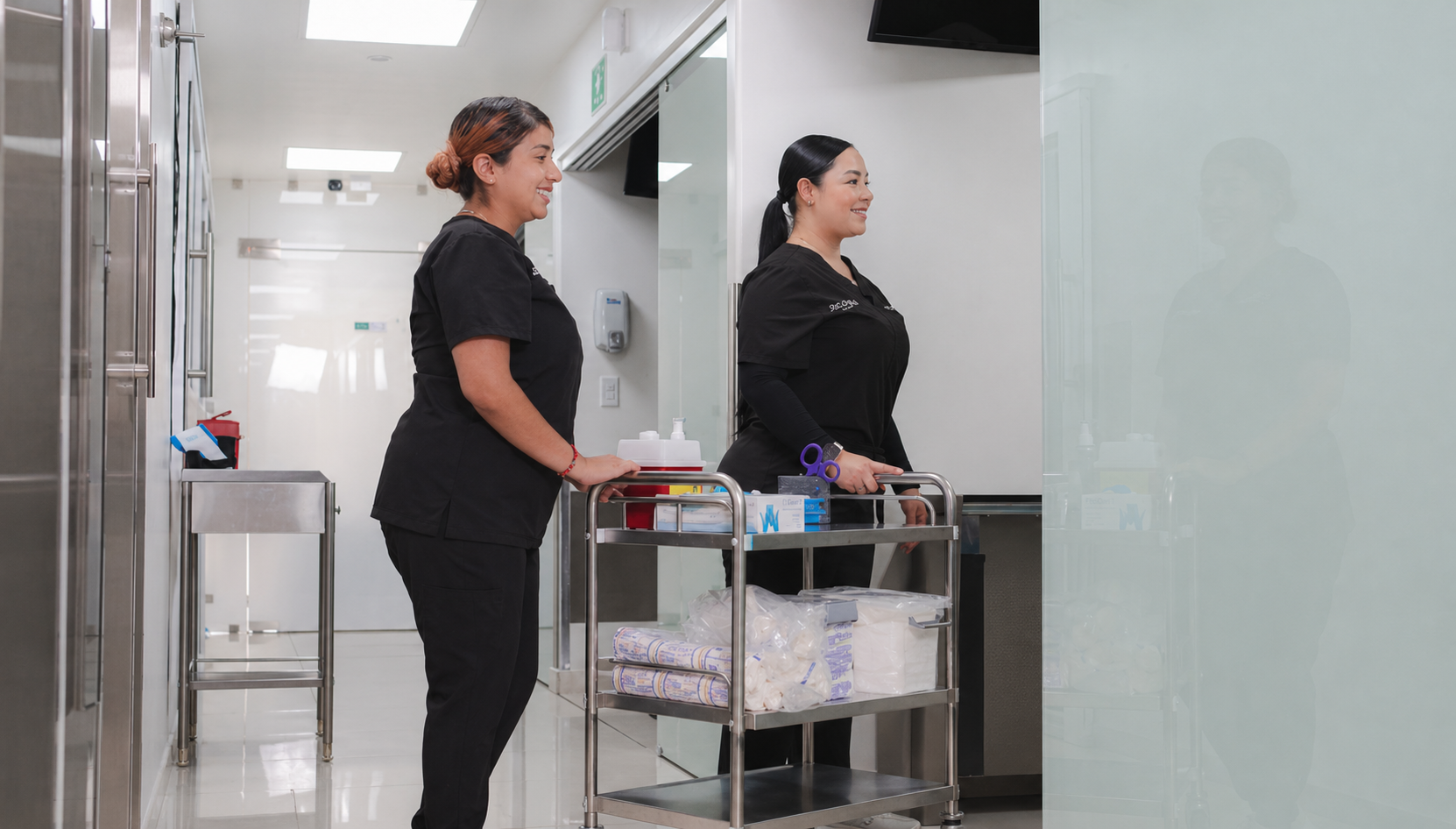
"Tijuana" is not a clinic. The actual address, the actual operating suite, and the actual specialist matter. Ask for the facility name, the certifications, the operating room photos, and the specific surgeon or specialist who will perform your procedure. If the answer pivots back to glossy marketing, ask again.
Question 5: Who do I contact when something feels off?
Even uncomplicated recoveries have moments. A swelling pattern, a question about a medication, an early-morning concern. The answer to this question should be specific and human: a name, a contact method, and a response time you can rely on.
You do not need a hundred questions before booking. You need five clean ones. If a provider answers all five clearly, you are dealing with a real program. If they cannot, the answer is no -- not yet.